

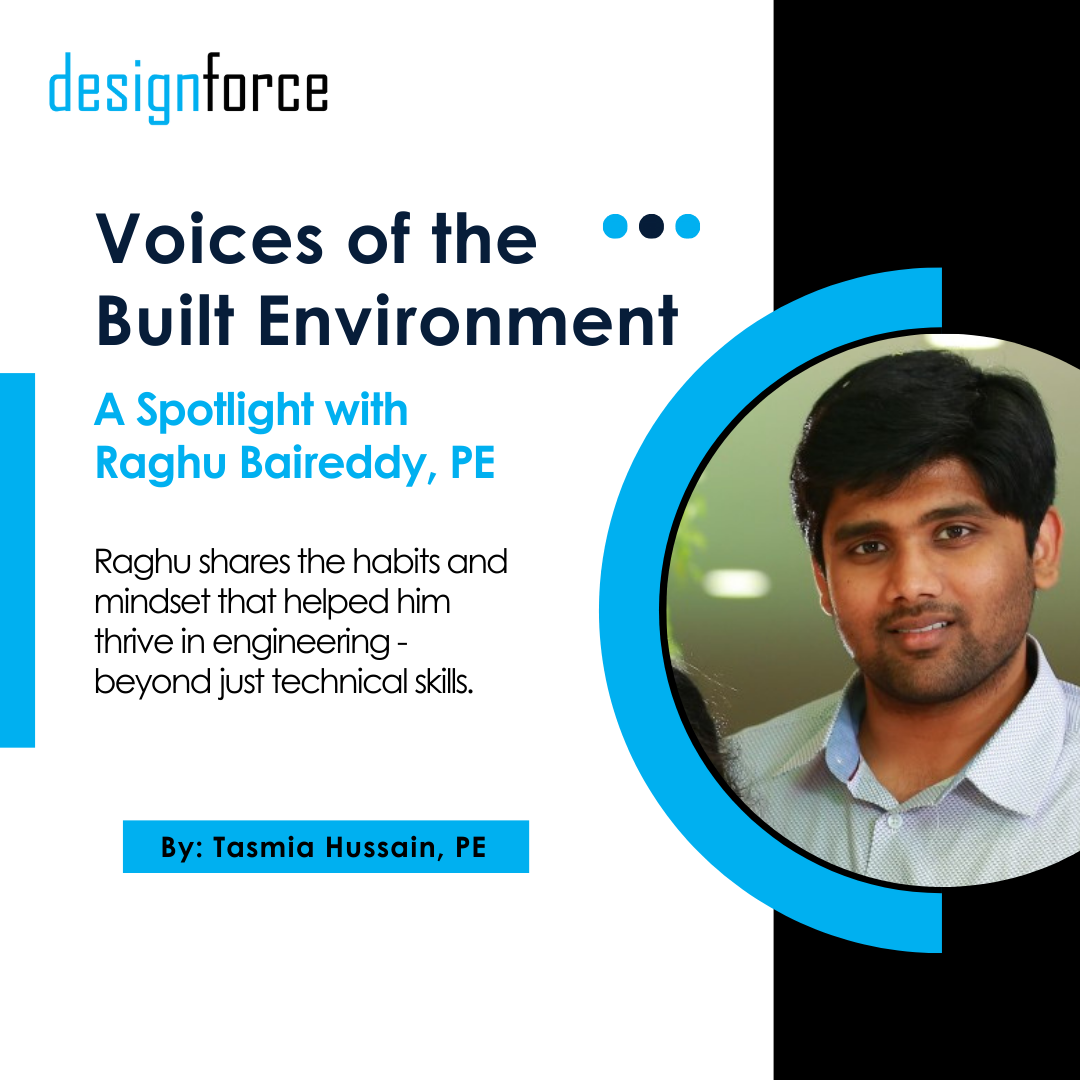
By: Tasmia Hussain, PE
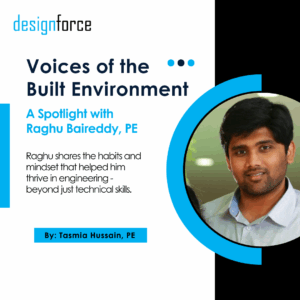
What does it take to thrive in engineering? For Raghu Baireddy, PE, Traffic Engineer at AtkinsRealis, the answer is more than just technical expertise.
I recently spoke with Raghu about the career lessons he’s learned over nearly eight years in the industry. Guided by exceptional mentors who encouraged experimentation and growth without fear of failure or judgment, Raghu developed a professional philosophy shaped by their example. He distilled their influence into three key insights for career success: leaning into curiosity, embracing humility, and exercising healthy skepticism.
Leaning Into Curiosity
Raghu shared that showing curiosity, especially as an emerging professional, is a key part of professional growth. As a junior engineer, you are given many tasks, and your manager may give you very specific step-by-step instructions and input on the outcome they want. But that can often limit you if you don’t look beyond the task. Always stay curious and ask the “why” questions, not just the “what” and “how” questions.
Understanding how your task fits into the bigger picture will help you become a better engineer!
Embracing Humility
Raghu emphasizes the importance of humility when it comes to professional growth. He shared the idea of the Dunning-Kruger Effect, which is a cognitive bias where people with limited knowledge tend to overestimate their confidence.
Basically, at the beginning of people’s careers, professionals often haven’t tasted failure yet and simply don’t know what they don’t know. It is easy to be overconfident or come across as cocky.
By staying humble, Raghu says, you remain open to soaking up knowledge from anyone, regardless of experience level. This will ultimately help you become a more confident and capable professional.
Exercising Healthy Skepticism
Many of us work with very talented people, and it can be tempting to take everything a very experienced person tells you at face value. But Raghu explains that most of the time, these are still just opinions or their perspective, not facts. Regardless of who is giving you input, it is important to practice healthy skepticism – always double-check your work and do your own due diligence.
Final Thoughts
Careers aren’t built solely from technical mastery but also from mindset: asking questions, staying grounded, and not being afraid to challenge assumptions. In a world that is constantly changing, the willingness to keep learning may be the most impactful skill of all.
This eagerness to observe and learn from those around him is what stood out most in my conversation with Raghu. I resonated with this mindset a lot. As a former Mechanical Engineer in the AEC industry, if I loved how a teammate pitched an interesting idea or navigated client communications, I mentally jotted that down. If a team lead approached a difficult conversation in a way that was inspiring, I noted it. I was constantly watching my peers and keeping a mental list of the behaviors and traits that I wanted to embody – that became the rubric for how I intentionally developed in my career.
Thanks, Raghu, for not only sharing your amazing nuggets of career advice but for demonstrating the observant mindset that has set you apart in your journey.
If you are an AEC professional with valuable career advice to share, please reach out to me at th@designforce.me as I’d love to feature you. Let’s continue to make a positive impact on professionals in this industry!
Related Posts



Let's learn together.
Stay inspired and in the know on all things A|E|C.
Sign up for our monthly newsletter.