

By: Jamal Cottman, MPS, SHRM-CP
As Pride Month continues, I’ve found myself reflecting on the people who have helped shape the architecture, engineering, and construction industry.
When we think about the built environment, our minds often go to the finished product. The skyline of a city. A hospital serving its community. A school filled with students. A bridge connecting people to opportunity. But the built environment is shaped by people long before it is shaped by concrete, steel, or glass. Every project begins with individuals willing to share ideas, challenge assumptions, solve problems, and work together toward something larger than themselves. The spaces we create are ultimately a reflection of the people who create them, which is one reason Pride Month feels especially relevant to our profession.
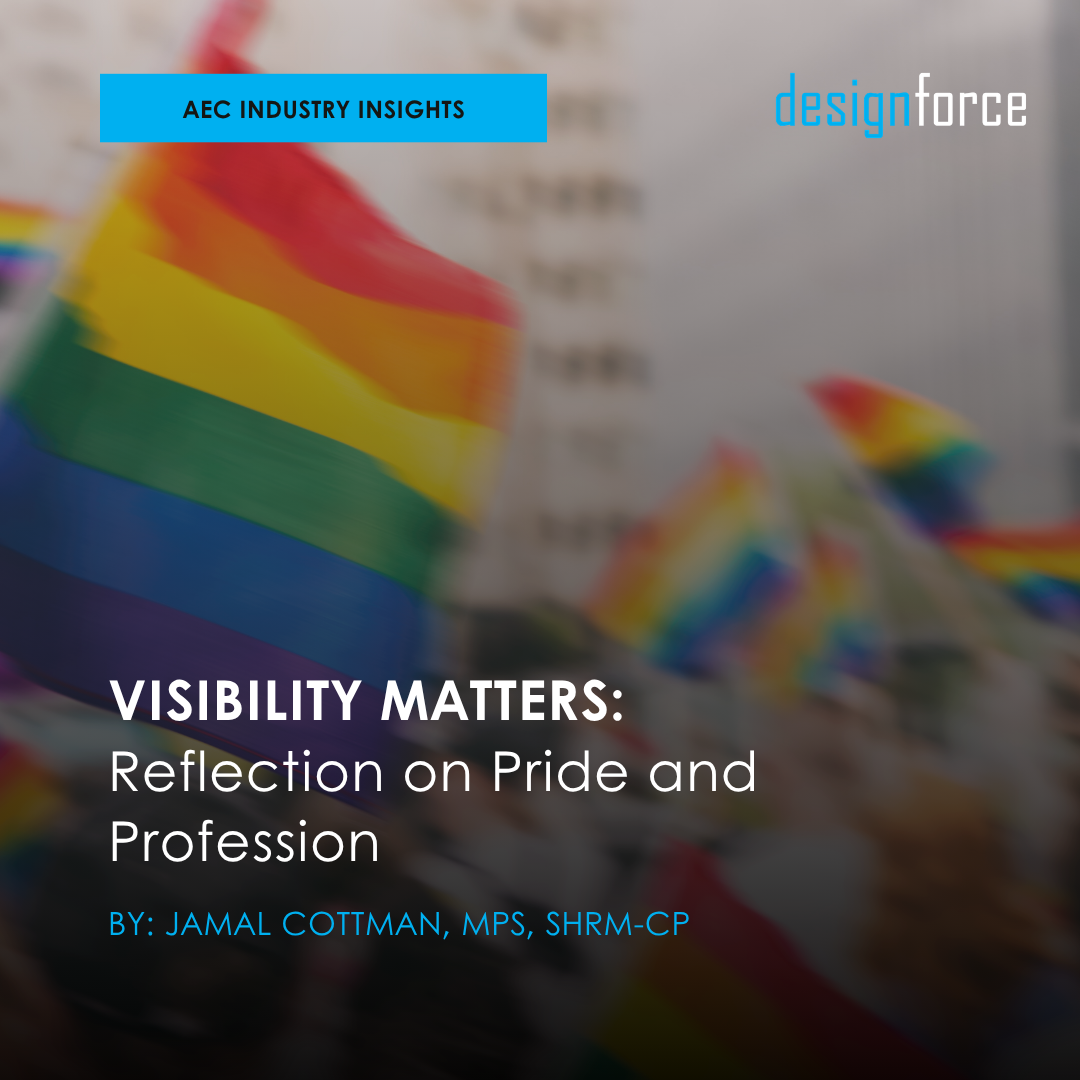
Deborah Berke once said, “Visibility matters.” That simple statement captures an important truth about our profession. Throughout the history of the AEC industry, LGBTQ+ professionals have helped design our buildings, engineer our infrastructure, lead project teams, manage construction efforts, and mentor future generations of professionals. Individuals such as Deborah Berke, Joel Sanders, and Jannx Marshall represent just a few examples of leaders whose contributions have left a lasting impact on the profession.
Berke is widely recognized as one of the most influential architects and educators of her generation. Through projects ranging from cultural institutions and higher education facilities to the adaptive reuse of historic buildings, including the transformation of New York’s 21c Museum Hotel, she has demonstrated how thoughtful design can connect history, community, and contemporary needs. As the first woman to serve as Dean of the Yale School of Architecture, she also helped shape the development of future architects, expanding opportunities for new voices to enter and influence the profession.
Sanders has challenged the industry to think more critically about the relationship between people and the spaces they inhabit. As an architect, author, and educator, his work has focused on inclusive design and the ways buildings can better serve diverse populations. His research and advocacy surrounding gender-inclusive public spaces have influenced conversations about accessibility, equity, and human-centered design, encouraging architects to consider how the built environment can create a greater sense of belonging for everyone.
Marshall’s impact has been felt within the engineering profession, where visibility and representation have historically lagged behind other disciplines. As a structural engineer, educator, and advocate, Marshall has used both technical expertise and public leadership to elevate conversations about inclusion within STEM fields. Beyond engineering projects themselves, Marshall’s willingness to be visible has helped demonstrate that LGBTQ+ professionals belong in every corner of the AEC industry, creating greater awareness and opening doors for future generations of engineers.
Their achievements deserve recognition not because of their identity alone, but because of the influence they have had on the profession and the people within it. Through design, engineering, education, and advocacy, they have strengthened the AEC industry while broadening the perspectives and experiences represented within it. Their legacy is reflected not only in the projects they helped deliver, but also in the professionals they inspired and mentored along the way.
Deborah Berke has often stated, “Visibility matters,” and that sentiment resonates deeply. At first glance, it seems simple, yet the longer I reflect on it, the more meaningful it becomes. Visibility matters because it expands possibility. It allows someone entering the profession to see a future that may not have felt accessible before. It reminds us that leadership, innovation, and excellence are not confined to a single background, experience, or perspective. Many of us have benefited from seeing someone who made us believe we belonged in a room, on a project team, or in a profession. Sometimes the most important impact a person has is not the project they completed, but the door they helped open for someone else. In many ways, that may be one of the most enduring forms of leadership.
That feels particularly important during Pride Month. While Pride is certainly a celebration, it is also an opportunity for reflection. Many of us are fortunate to work in environments where we can contribute openly and be recognized for our work. Yet that experience is not universal. Around the world, there are still individuals who do not enjoy the same freedoms, protections, or opportunities that many of us may take for granted. Recognizing that reality does not diminish the progress that has been made. If anything, it makes that progress even more meaningful. It reminds us that every advancement, whether in society or within our profession, was made possible because someone was willing to create space for others, challenge what existed, and imagine something better.
In many ways, that is the same responsibility we carry today. The AEC industry has always been about building for the future, not simply structures, but opportunities. Not simply places, but communities. Not simply projects, but the conditions that allow people to thrive. As we recognize Pride Month, I am grateful for the LGBTQ+ professionals whose contributions have strengthened our industry and expanded what future generations can see for themselves. Their impact is reflected not only in the projects they helped deliver, but in the example, they set and the opportunities they created for others.
Because visibility matters.
Related Posts




Let's learn together.
Stay inspired and in the know on all things A|E|C.
Sign up for our monthly newsletter.